

Entering the Greek online gambling market is no small move. Greece has controlled online betting and casino services under the Hellenic Gaming Commission, and operators must meet strict technical, financial, and responsible gaming requirements. For players, a new launch means more options; for competitors, it signals pricing and product competition. LeonVegas Casino’s local landing page positions the brand as a full-service casino and betting hub. Industry leaders take notice because the Greek market compensates platforms that localize effectively, offer fast payouts, and maintain clear bonus conditions. We examined how the page organizes its offer, what categories it highlights, which payment and bonus structures matter, and where the experience stands from an analytical reviewer angle. This review examines practical details a Greek player should consider before joining. Our goal is to distinguish substance from marketing language so you can choose whether the platform fits your play style.
The Hellenic Market Entry That Alters the Equation
In Greece, online casino and betting run under a licensing regime that has steadily opened the market to international brands. The Hellenic Gaming Commission supervises operators, and local regulations require player verification, responsible gambling, and anti-money laundering duties. When a brand such as LeonVegas Casino comes through a local page, it has to adjust its product to those rules rather than simply translating an international site. We see the launch as significant because the Greek market is mature but still segmented across different operator types. Players are accustomed to comparing welcome packages, game speed, and withdrawal reliability. A new entrant must therefore deliver more than a recognizable name; it has to equal or exceed local expectations. The main page indicates an attempt to address those expectations through clear category navigation, payment information, and mobile-first messaging. Industry competitors are likely observing how quickly the platform builds trust in a market where word of mouth and forum discussions affect behavior.
What shifts for Greek players is the addition of a dedicated local experience instead of a generic international version. This matters because support hours, currency handling, and payment options can differ substantially when a site adapts. The page structures information around Greek-facing priorities, including euro-denominated deposits and payment methods common in the region. The broader industry implication is that a new, well-resourced operator can elevate the standard for bonus clarity and customer service. We also remark that a launch of this type increases competition for player retention, which often leads to improved cashback, faster verification, and more transparent terms across rival brands. Readers should still approach the promotion with a critical eye and confirm licence details directly on the Hellenic Gaming Commission’s register rather than trust marketing text. A strong local entry should be tested through real account activity, not judged only by the size of the welcome offer.
Game Categories and What Is Available to Play
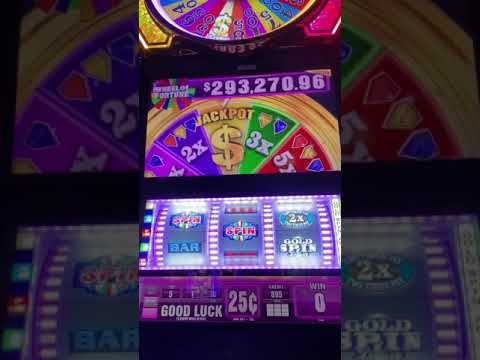
The primary categories adhere to the usual online casino setup: video slots, table games, live dealer casino, and often a sportsbook or wagering section. Greece’s market has strong demand for live table roulette and blackjack, so the live casino section is an important indicator of product depth. Video slots are generally the biggest category, with providers covering major global studios to smaller specialized developers. We looked at if the page offers practical filter choices like developer, style, or volatility, because an endless grid is not a usable library. A robust platform should allow gamblers find games via name or category without having to scroll through hundreds of tiles. The exact number of titles is less important than how fast the site loads them and whether or not the search function supports Greek and English queries. For table game enthusiasts, verify whether versions including European-style roulette, blackjack, and punto banco are available instead of assuming every platform include them. Our review centers on actual usability, not merely sheer quantity.
Live dealer gaming deserves special attention since it consumes more data and needs stable software. Games are broadcast from studios and frequently support various camera angles, chat, and data. Players in Greece ought to expect high-definition streams, but the quality is determined by internet speed. We advise testing a live table before depositing big money. The site’s game selection probably includes several blackjack and roulette rooms, game-show titles, and possibly Greek-speaking dealers at peak hours; if this is important to you, check the game details or reach out to support. For slots, look at RTP percentages and volatility. A high-volatility slot might produce fewer frequent wins, while low risk typically generates smaller, more regular returns. RTP numbers are commonly shown within the game’s help menu. The homepage may not list them, but a quality casino makes that information accessible. Software providers also matter as developers vary in fairness checks and game feature quality.

- Slot machines: primary collection with themed titles, progressive jackpot, and bonus-feature titles
- Casino table games: roulette, blackjack games, baccarat, and poker game types
- Live casino: streamed table games and game-show formats
- Progressive jackpot games: specific area where available
Bonus System and What to Review Before Claiming
The main bonus types in a Greek launch usually include a welcome deposit match and free spins, sometimes split across the first deposits. We did not treat the advertised amount as the most crucial factor. A larger bonus could be less worthwhile if the wagering requirement is high, the time limit is short, or the game contribution is low. Greek players need to read the terms before depositing because the headline number is just part of the value calculation. The local page’s promotional section will show the current offer, but the binding conditions are normally within a separate terms document. We search for fairness in four areas: wagering multiple, game weighting, maximum bet during wagering, and maximum withdrawal from bonus winnings. A bonus that appears generous can be impractical if it forces you to wager too much within a few days. The most practical approach is to compare the required wagering against your normal play volume.
Wagering and Expiry Checks
The wagering requirement is the number of times you must play through the bonus or deposit-plus-bonus before withdrawing related winnings. Game contributions vary: slots frequently count fully, table games might count a lower percentage, and live casino titles may be excluded. We suggest checking whether the bonus is sticky or non-sticky, because this affects how withdrawals are handled. A non-sticky bonus separates your cash from bonus funds, while a sticky bonus merges them. Time limits are similarly important. A short expiry window may pressure players into faster bets and larger sessions than they planned. Players should also watch for maximum bet limits during wagering, because exceeding them may void the bonus. If the terms have unclear language about withdrawal caps, ask support for a written clarification before you deposit. The official page is the single source for current figures; our role is to clarify what those figures mean.
- Check wagering multiple and which games count
- Review maximum bet and expiry window
- Record any withdrawal cap on bonus winnings
- See whether free spins winnings are credited as bonus or cash
How the Platform Is Structured Around Greek Players
When we evaluate a Greek-oriented casino, the first practical test is localization. LeonVegas Casino’s local page does not merely show a generic international lobby; it opens with categories and tools that match how Greek players navigate. The main menu divides slots, table games, live casino, promotions, and payments, which cuts down on search time. Currency display in euros is key because it prevents confusing conversion calculations. We also look at whether support channels are easy to reach from the homepage. A site that conceals contact options behind multiple menus causes unnecessary friction. Our analytical view is that the structure works best when the player can move from a promotion banner to the terms and then to a payment page without losing context. That could sound basic, but many casino platforms fail at precisely this point. Readers ought to test the navigation before depositing, especially on a mobile device, because the desktop layout can be misleading.
Account registration and eligibility need attention https://leonvegas.gr/. Before you claim any offer, make sure you fulfill the basic conditions: you must be of legal age according to Greek law, you must provide accurate personal details, and you need to have a payment method in your own name. We suggest completing identity verification early instead of waiting until the first withdrawal. A common issue is that players deposit and play promptly, then experience delays because their documents are not approved. The local page contains responsible gambling prompts and account tools, but the practical steps remain the same across most regulated casinos. Have a clear photo or scan of your ID prepared, a recent utility bill or bank statement, and be ready to confirm your phone number or email. If the site permits Greek residents only, the terms must state this; when that detail is unclear, ask support before depositing.
- Valid government-issued ID or passport
- Recent address proof like a utility bill or bank statement
- Payment method registered under your own name
- Valid email and phone number for verification
Payment Methods, Processing Times, and Actual Limits
Payment handling is where Greek players often evaluate a casino’s reliability. The page categorizes methods into cards, e-wallets, bank transfer, and prepaid vouchers, which is typical for the Greek market. Debit cards such as Visa and Mastercard are widely used, but some banks may restrict gambling transactions, so a backup e-wallet is useful. E-wallets such as Skrill, Neteller, or PayPal can deliver faster withdrawals, although availability changes. Bank transfers are dependable for larger amounts but tend to be more time-consuming. We always check whether a method can be used for both deposit and withdrawal, because some prepaid cards are deposit-only. The practical limit is equally important as the method itself: minimum deposits are often modest, while withdrawal maximums may be per transaction or per day. The site should display these limits before you proceed. If a page does not reveal them openly, contact support and inquire for the payment policy.
Processing times are based on three stages: internal review, payment provider transfer, and bank clearance. A casino may confirm a withdrawal within 24 hours, but the e-wallet or bank still needs time to transfer the funds. We distinguish these stages so players do not think the operator is holding up when a bank tvxs.gr transfer takes three business days. E-wallet withdrawals are usually the fastest once approved, while card and bank transfers can take several business days. Verification is the biggest avoidable delay. If you submit clear documents early, your first withdrawal will typically move faster. Some platforms implement a pending period during which you can cancel a withdrawal; we view this as a varied feature because it allows players to reverse funds but can also generate uncertainty. Before depositing, verify whether fees apply to withdrawals and whether the payment method you use for deposit must also be used for cash out.
- E-wallets: often fastest after approval
- Cards: common, may take 1–5 business days
- Bank transfer: more time-consuming but ideal for larger amounts
- Prepaid vouchers: deposit-only, demand alternative withdrawal method
Regulation, Security, and Responsible Gambling Infrastructure
A launch in Greece requires an operator to operate under the Hellenic Gaming Commission framework. This means particular technical standards, data protection duties, and player fund security obligations. We did not depend on the brand’s own safety claims alone; we looked for the visible signals of a regulated local operation. The page’s footer should display licensing information and links to responsible gambling resources. Security should also encompass SSL encryption for data transmission and segregated player funds. The last point is important because a licensed casino should hold player money separate from operating capital. Greek players can also verify the licence on the regulator’s public register. We advise doing this before making a first deposit, especially with a new local entry. A legitimate platform will not dissuade you from checking. If the licence details are missing or impossible to find, that is a red flag regardless of how polished the site looks.
Responsible play tools are part of the licensing obligation, but their quality differs. We search for deposit limits, session reminders, time-outs, self-exclusion options, and direct links to support organizations. A practical player should establish a deposit limit during registration or immediately after, rather than waiting until losses exceed a comfortable level. The platform may also present reality checks that indicate how long you have been playing. These tools are not markers that the casino is intrusive; they are part of a sustainable gambling environment. In the Greek market, self-exclusion and registry tools can include both operator-level and national systems, so players should grasp what happens when they request a block. We also examined whether the site explains its privacy practices clearly, because identity documents and payment data are sensitive. A well-designed responsible play section should be available from the homepage without searching through multiple menus.
On-the-Go Experience and What Genuinely Sets the Launch Apart
A large number of Greek players will reach the casino from a smartphone, so mobile usability matters equally to desktop. The local page seems to be built with a mobile-first layout, and we check for touch targets, menu placement, and load speed rather than relying on screenshots. A good mobile casino should not require a separate app to function; the browser version needs to handle account management, deposits, and game loading. If a dedicated app exists, it ought to provide the same payment methods and live casino stability as the desktop site. We also monitor excessive data consumption, especially in live casino streams. Greek mobile networks are usually dependable in urban areas, but coverage might fluctuate on islands or in rural regions. A player should be able to set lower stream quality or find games that work on a weaker connection. Before signing up, check the mobile site with a free game or by browsing the live lobby.
What genuinely sets a Greek launch apart is not the size of the welcome banner but the consistency of the whole experience. We examine whether the site maintains clear terms, supports the payment methods Greek players already use, and does not hide withdrawal conditions. Industry leaders are probably observing because a platform that combines local licensing, practical mobile design, and transparent bonus mechanics may lift expectations across the market. For players, the step is simple: treat the launch as a product to test, not a promise to trust. Open an account, complete verification, test a small deposit, and measure how long a withdrawal actually takes. That practical approach reveals more than any review. We expect the Greek market to reward operators that treat customer support and payout reliability as core features. LeonVegas Casino’s local entry gives readers a new point of comparison, but the final test remains your own experience.